Upgrading Sheet Metal Stamping: How Combined Processing Helps Factories Cut Costs and Boost Efficiency
Technology leads development, innovation wins the future
Upgrading Sheet Metal Stamping: How Combined Processing Helps Factories Cut Costs and Boost Efficiency
Upgrading Sheet Metal Stamping: How Combined Processing Helps Factories Cut Costs and Boost Efficiency
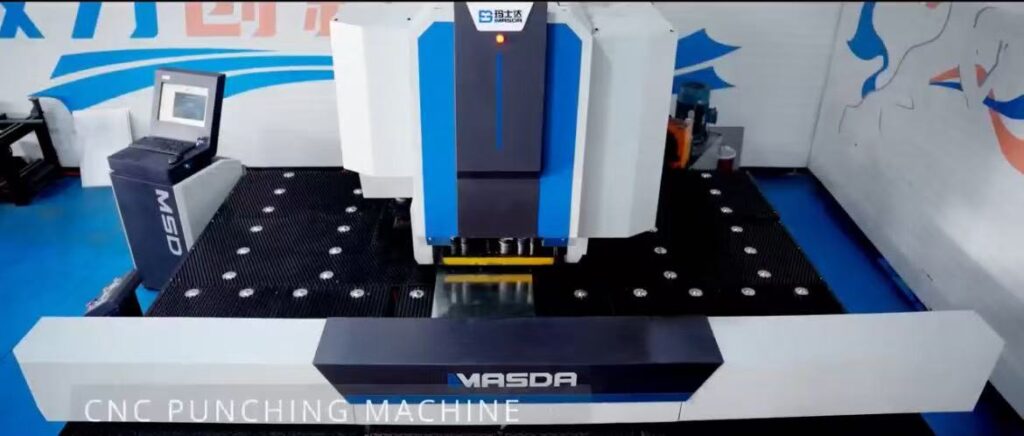
Sheet metal factory costs extend beyond equipment purchase prices to include labor, tooling, material waste, and process wait times. Traditional decentralized stamping involves fragmented processes and the back-and-forth movement of workpieces, which invisibly drives up overall production costs. The Masda combined CNC punching, tapping, and hydraulic forming machine helps sheet metal enterprises optimize their production models through integrated processing technology.
Reducing Process Transfers and Shortening Production Cycles
In the traditional model, after the sheet metal is blanked, it must move between multiple machines—such as punch presses, tapping machines, and forming equipment. Each transfer and re-clamping operation consumes time and introduces potential positioning errors. The Masda combined machine integrates punching, forming, tapping, and cutting. All processes are completed with a single clamping of the sheet, reducing transfer delays and shortening the overall production cycle for faster order delivery.
Lowering Tooling Investment and Handling Diverse Specifications
Orders involving a wide variety of parts in small batches are becoming increasingly common. Customizing dedicated molds for every forming operation entails high costs for procurement, storage, and maintenance.
The combined machine utilizes universal tooling to perform various forming processes, reducing investment in non-standard molds; this eliminates the need for new molds during prototyping and accelerates new product development.
Reducing Reliance on Skilled Technicians and Simplifying Maintenance
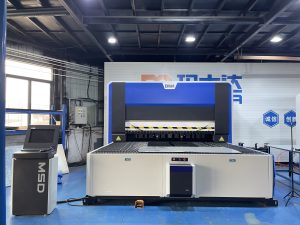
The equipment is easy to operate; standard operators can run the machine after training, helping to alleviate the industry-wide challenge of recruiting skilled technicians. The machine features an optimized structure that simplifies maintenance, allowing general maintenance staff—rather than specialized senior technicians—to handle upkeep and repairs. Additionally, the machine can integrate with automated assembly lines and link with bending centers to create a complete, unmanned sheet metal production line, providing a one-stop automated sheet metal solution for industries such as enclosures, fire safety equipment, and office furniture.



 Mar,05 2025